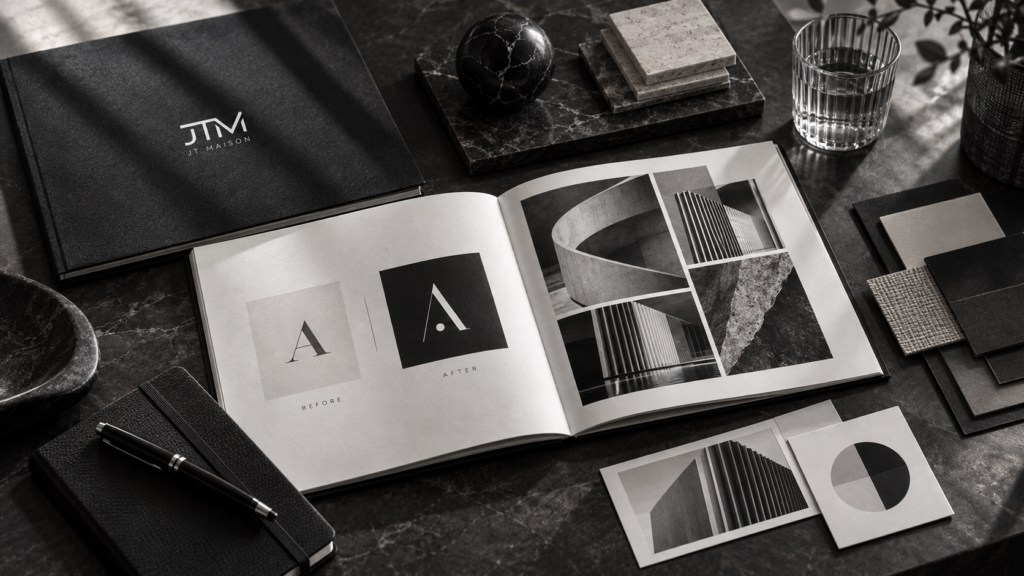
London Fashion Week is not just a showcase for collections. It is a five-day stress test for brand perception – and most brands do not realise they are being graded.
London Fashion Week SS27, organised by the British Fashion Council, returns to the capital this September. The schedule features established British houses alongside emerging designers, and the international press, buyers, and industry figures who attend will form opinions about every brand they encounter. Most of them within seconds, and most of them permanent.
But here is what the coverage rarely says: the brands that win London Fashion Week are not always the ones with the strongest collections. They are the ones with the clearest perception. The ones where everything, from the invitation to the venue to the front row to the Instagram grid to the post-show coverage, tells a single, coherent story.
And the brands that lose? They show excellent work to a room that has already decided what to think of them. Because perception was set before the first look hit the runway.
This is not a fashion problem. It is a brand problem. And it applies to every business that puts itself in front of a discerning audience.
The brands that win London Fashion Week are not always the ones with the strongest collections. They are the ones with the clearest perception.
What Fashion Week Actually Measures
Fashion week is publicly presented as a showcase for design. It is actually a test of brand coherence. Every element a brand controls during that week, and many it does not, is being read as a signal by an audience that is professionally trained to decode signals.
The invitation design. The venue choice. The casting. The music. The seating plan. The way the team communicates backstage. The designer’s post-show interview. The Instagram story posted three minutes after the finale. Each of these is a brand touchpoint, and each one either reinforces the brand’s positioning or quietly contradicts it. The brands that understand this treat fashion week not as a presentation but as a controlled brand experience. Victoria Beckham is a consistent example of this discipline, where every element from show venue to post-show content reinforces a single, unmistakable brand identity. Every decision, from the lighting rig to the font on the show notes, is reverse-engineered from the perception they want to create. The collection is the centrepiece, but the perception is the product.
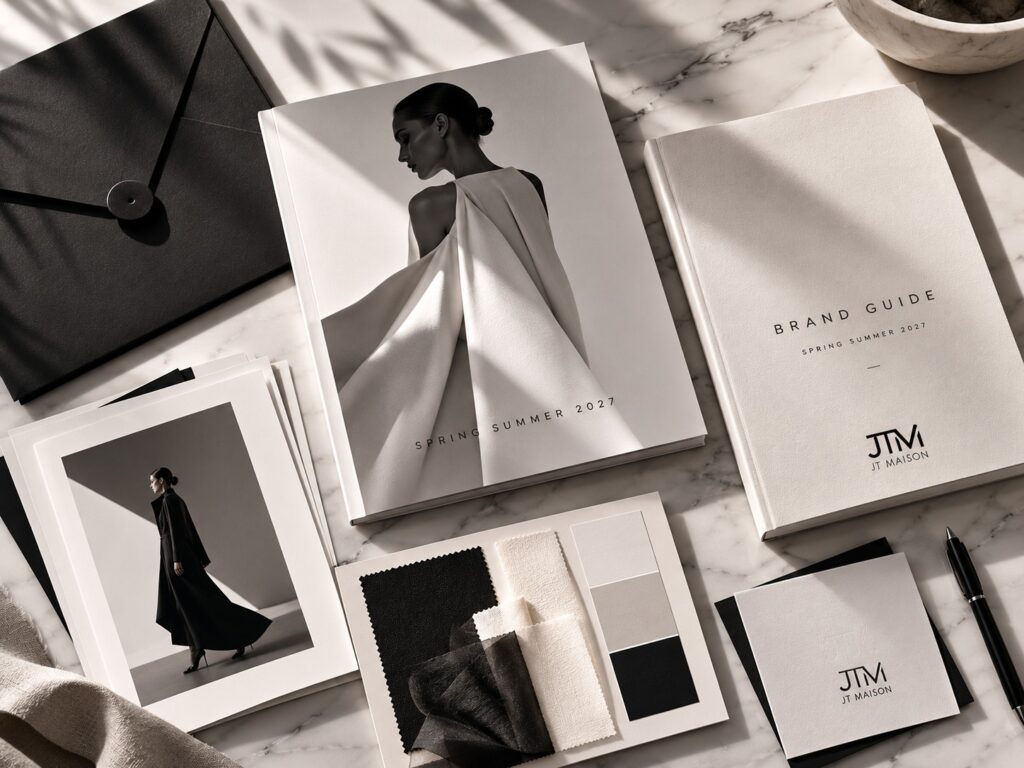
Three Things That Separate the Brands People Remember
Having worked with brands preparing for high-visibility moments, including fashion events, editorial launches, and international showcases, three patterns consistently separate the brands that land from the ones that fade:
1. They control the story before anyone else tells it.
The most effective brands at London Fashion Week do not wait for press coverage to define them. They arrive with a narrative already in place, communicated through pre-show content, deliberate seating, targeted previews, and a visual identity so consistent that every journalist and buyer can describe the brand in the same sentence. When the coverage lands, it echoes the story the brand already told. That is not luck. That is positioning.
2. They understand that perception is set before the runway.
By the time the first model walks, the audience has already formed a view. The invitation set the tone. The venue confirmed or contradicted it. The check-in experience, the lighting, the pre-show atmosphere: these are not logistics. They are the first three chapters of a brand story, and they are being read by people who evaluate brands for a living. The collection can elevate a strong perception. It cannot rescue a weak one.
3. They make one impression, not five.
The most common mistake brands make at high-profile events is trying to communicate everything at once. They want to signal luxury and accessibility. Heritage and innovation. Exclusivity and reach. The result is a muddled perception that gives the audience nothing to hold onto. The brands that cut through make one clear statement and let every touchpoint reinforce it. Simplicity is not a limitation. It is a discipline, and it is what makes a brand memorable in a week where hundreds are competing for the same attention.
The collection can elevate a strong perception. It cannot rescue a weak one.
Why This Matters If You Are Not in Fashion
London Fashion Week is an extreme environment. Five days, hundreds of brands, an audience that makes decisions in seconds. But the principles it exposes are universal. Every business that puts itself in front of a high-value audience faces the same test: does your brand tell a coherent story across every touchpoint, or does it send mixed signals that leave the audience unsure what to think?
A pitch meeting is your runway. A website is your show notes. A proposal is your invitation. A client’s first phone call with your team is your front-of-house experience. Every one of these moments is being read the same way a fashion editor reads a front row: quickly, instinctively, and with very little tolerance for inconsistency.
The businesses that command premium prices and attract high-value clients are the ones that have done the same work the best fashion brands do before they ever step in front of an audience. They have decided exactly how they want to be perceived, and they have aligned every touchpoint to deliver that perception without contradiction.
The Perception Audit
Before your next high-visibility moment, whether that is a launch, a pitch, a rebrand, or simply the day your website goes live, ask three questions:
-
- If someone encountered your brand for the first time today, what would they conclude about your market position within thirty seconds?
-
- Does every touchpoint, from your website to your proposals to your social presence to your team’s communication, tell the same story? Or are there contradictions you have learned to ignore?
-
- Could a journalist, a client, or a partner describe your brand in a single sentence? If not, you have not yet made the decision that the best brands make before they walk into any room.
London Fashion Week exposes these gaps in public, at speed, under scrutiny. Most businesses face the same test more slowly and less visibly, but the consequences of getting it wrong are just as real.
| Your next high-visibility moment deserves a brand that is ready for the room it wants to be in. → Tell Us About Your Project |